
We do not source. We select.
The discipline that separates a house of brands from a supplier with ambition.
There is a distinction that most of the market treats as a detail and we treat as the foundation of everything: the difference between sourcing and selecting.
Sourcing is a purchasing act. You go to the market, you evaluate what is available, you choose what meets your specification at a workable price. It is a perfectly rational discipline - and it produces a perfectly rational result. Consistency of a kind. Reliability of a kind. The kind you can manage retrospectively if something falls short.
Selecting is a different act entirely. It begins before the product exists. It begins with who you choose to work with - and why.
The single most important thing we do at Paradigm Foods is not the grading, not the genetics program, not the thirty-country distribution. It is this: the selection of who we work with.
Our farming partners are not suppliers in the conventional sense. They are collaborators - entered into through years of relationship, evaluated against criteria that begin with their land, their program, and their shared understanding of what the standard requires. We are not looking for capacity. We are looking for alignment. Those are different things, and the distinction produces a categorically different outcome.
The network that results is small by design. It is not expandable on demand. You cannot approach the House of Wagyu and ask us to scale because your order has grown - the network produces what the network produces, with integrity, and what it produces carries our name. What it cannot produce, or will not produce to that standard, does not.
This is a constraint we choose to live within. It is also what makes the brands defensible.
Consider what vertical integration - the model most producers operate - actually gives you. You own the land, the herd, the feedlot, the processing facility. You control the whole chain. That control is real, and we do not dismiss it.
What it does not give you is the freedom to be wrong about any single part of the chain. When you own everything, you optimise everything together - which means you sometimes optimise the genetics for what the feedlot handles, or optimise the feedlot for what the processing facility prefers, or accept a compromise somewhere in the middle because the whole system needs to work. The integrated producer is, by definition, selling what their system produces.
We are not vertically integrated. We own the relationships, the standards, and the brands. What that means in practice is that we can hold every partner in the network to the single question that matters: does what you produce carry our name or not? The farming partner who cannot hold the standard does not stay in the network. The feedlot that cannot hold the standard does not stay in the network. The standard itself is not adjusted to accommodate what the system can do. The system is selected to meet the standard.
That is the structural difference. And it cannot be replicated by a producer who has sunk forty years and a family’s capital into a single station.
Every region in this portfolio was chosen for what it alone can contribute. Cool southern air for the fullblood program. Long northern summers for the grain-fed. Rich inland feed country for the extended programs. Each environment leaves its mark in the fat, the flavour, the texture, in ways that are not theoretical - they are measurable in the carcase.
The land is not background. It is ingredient.
This is what the chef understands that the spec sheet misses: that what the animal ate and where it lived arrives at the kitchen with the carcase. You can read it in the colour of the fat. You can taste it in the finish. A dish that names the source is only telling the truth if the source actually shaped the product - and ours did, because we chose the source for exactly that reason.
Five brands. Five distinct expressions. One standard that holds across all of them.
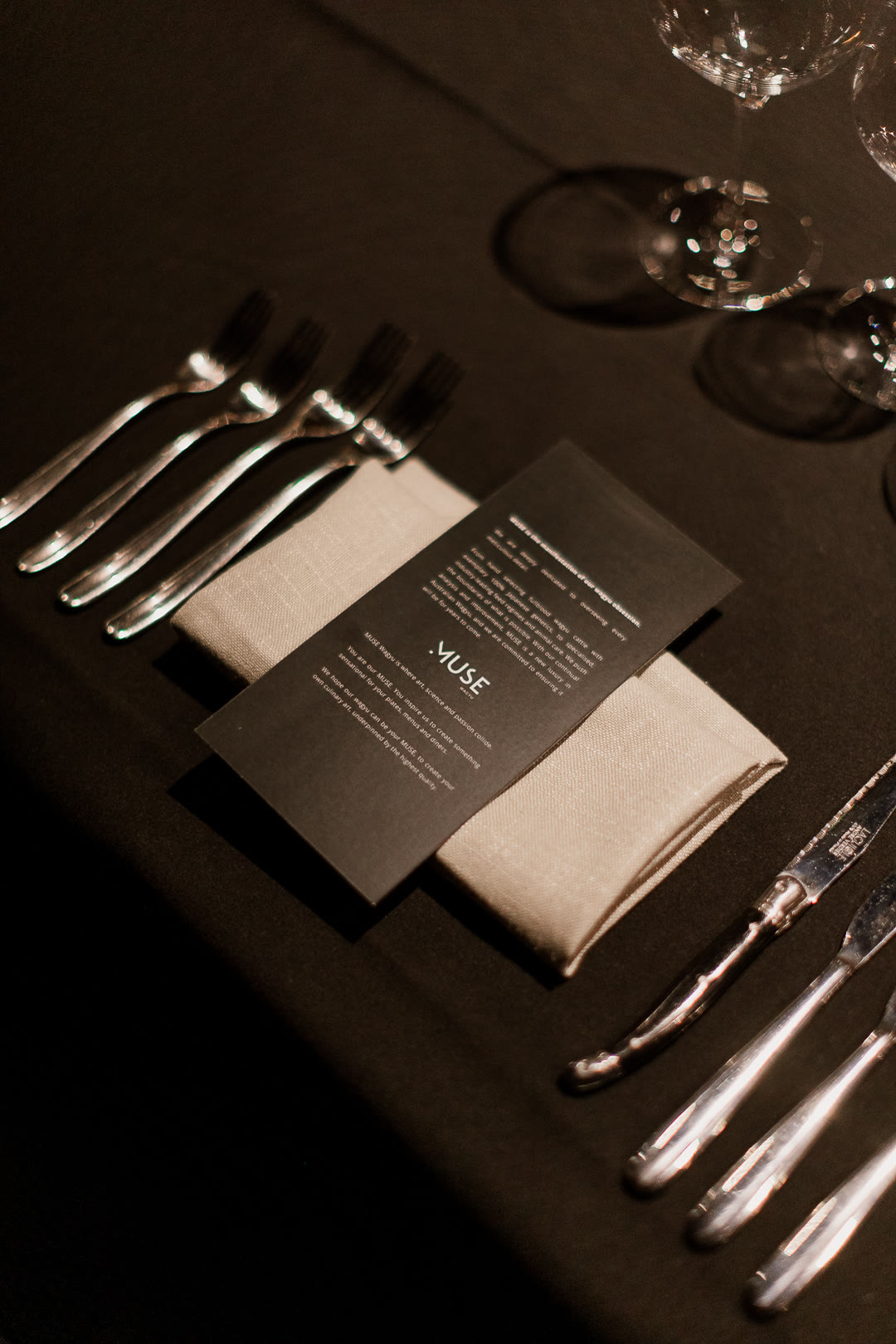
That is the architecture of the House of Wagyu, and it is only possible because the discipline of selection - not sourcing - was applied at every stage. MUSE is the sensual showpiece because the fullblood genetics, the Tasmanian program, and the farming partners behind it were chosen to produce exactly that. SENKU is the pioneer because the breeding program has been running for more than thirty years, with patience that cannot be manufactured in a shorter timeframe. ROAM is place in a carcase because we chose farming partners and country that would let the animal express what land and time can do, without interruption.
None of these are outcomes you can assemble from the market. They are the results of choices made long before the animal reached the abattoir.
We exist for the buyer who understands that distinction. Not the majority - the few. For the chef who stakes their name on a dish and needs the story behind the product to be as true as the dish itself. For the distributor who builds a portfolio on differentiation that their competitors cannot simply copy. For the hospitality group that will not put a supplier’s name on a menu unless they can stand fully behind what that name represents.
If that describes the way you work, the conversation belongs here.