
The Craft
Craft has no shortcuts.
The long way is the only way.
What separates the House of Wagyu from the rest of the Australian Wagyu category is not only what we produce. It is how we produce it - and the reasoning behind every decision in that process.
This is the story of that practice.

The Source
We do not source. We select.
The single most important thing we do at Paradigm Foods is the selection of who we work with.
Our farming partners are not suppliers in the conventional sense. They are collaborators - chosen through years of relationship, evaluated against criteria that begin with their land, their program, and their commitment to the standard. We are not looking for capacity. We are looking for alignment. Those are different things, and the distinction matters enormously in the quality of what reaches the table.
The result is a network that is small by design. Not open to the market, not expandable on demand. This is not a limitation. It is the source of the consistency and integrity that our brands depend on.
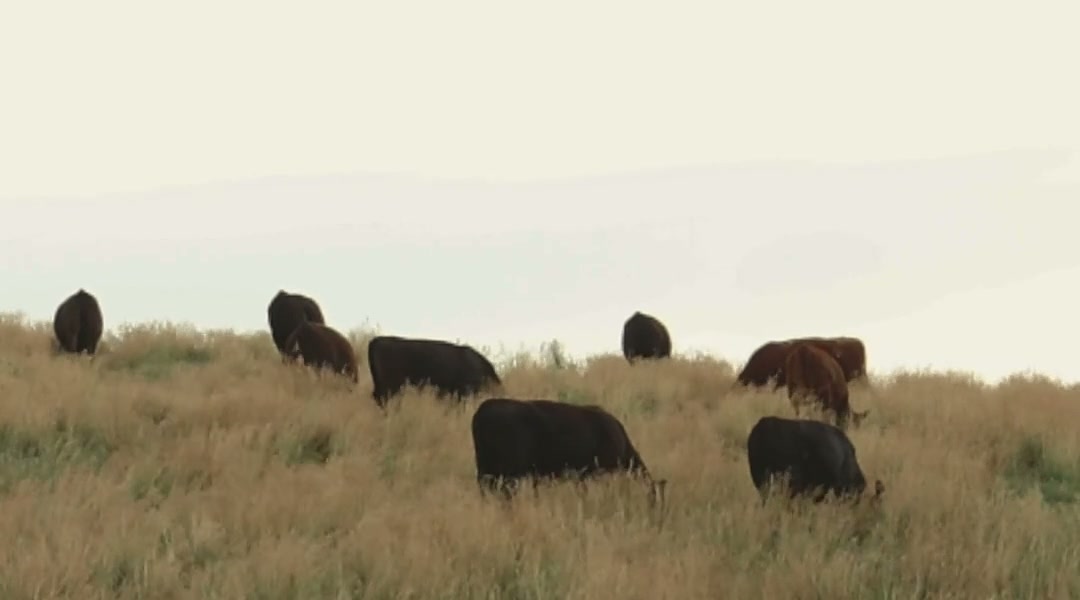
From the deep south to the tropical north, every region in this portfolio was chosen for what it alone can contribute. Cool southern air. Long northern summers. Rich inland feed country. Each environment leaves its mark - in the fat, the flavour, the texture. The land is not background. It is the ingredient most people never think to credit.

"The land is not background. The land is an ingredient."
The Making
Every decision is a quality decision.
There is a conventional way to produce Wagyu. We are familiar with it. We do not practise it.
The conventional approach prioritises efficiency - standard rations, standard timelines, standard welfare minimums. The result is consistent in the way that any standardised process is consistent: predictable and safe, but without particular character.
Our feeding programs are designed from the outcome backwards. We begin with the eating experience we want to produce and work back through feeding duration, ration composition, pen environment, and genetic selection. Everything is in service of that outcome. The animal gets what it needs to become what the program requires - a purpose-formulated Wagyu ration, sufficient time, and the conditions to develop properly.
Grain programs across the House range from extended long-fed programs designed for maximum marbling expression in fullblood and purebred genetics, to the entirely grain-free approach that ROAM's extensive grass-fed program demands. What they share is the logic: nothing less than what is required, nothing artificial.
Animal welfare and quality are not competing priorities. The same patience, consistency, and care that create calm cattle also contribute to the outcome. Every decision serves both.


The Standard
The gate that nothing passes through unmarked.
Every carcase that carries a Paradigm Foods brand name has been through the same final gate: graded by Japanese digital imaging, analysed by AI, then assessed in person by our team before any decision is made.
Technology is the tool. The standard is held by the people who look at every carcase and ask: does this carry our name?
What does not make the grade does not carry the brand. This is a reputational decision - the understanding that a brand means something only if it is defended at the point of production, not managed retrospectively in the market.
MUSE is processed at G&K O'Connor's accredited facility. SENKU, ICON, and YUGO at Stanbroke. ROAM at Nolan. All facilities are halal certified. All product is cryo-vacuum sealed and prepared for global shipping.
From the land we selected, through the program we designed, to the table it was always intended for.


The Feedback Loop
Why every animal matters.
Our obsession doesn't stop at breeding. It continues through every stage of an animal's life.
On-farm data - growth rates, health, temperament. Feedlot data - feed efficiency, weight progression, daily gains. Abattoir data - marbling scores, MIJ camera grading and AI analysis, yield, meat quality metrics. Kill data that shows us exactly how each genetic pairing performs.
Every data point feeds back into the breeding program. Every animal teaches us something. The system improves with every generation. This is how obsession becomes precision. This is how precision becomes consistency.
We're not moving product through a system. We're building genetics through feedback, learning, and deliberate choice.
This is provenance. This is identity. This is why a name means something.

Precision in Practice
Genetics are the recipe.
A chef measures ingredients with precision. Wagyu genetics have been measured, refined, and deliberated for decades.
The sire and dam are chosen through data and genomics. The ration is precision-measured for each animal's stage and bloodline. The handling is consistent. The environment is calm. Every decision compounds.
This is not luck. It's the same exacting standard applied across every variable, every generation, every single animal.